Introduction
Forgiveness can be difficult for children and adults alike. When someone says something unkind, breaks a promise, leaves us out, or hurts our feelings, holding onto anger can feel easier than letting it go.
Christian forgiveness does not pretend that hurtful choices are acceptable. It means bringing our pain to God, choosing not to seek revenge, and asking Jesus to help us respond with compassion. This guide gives parents a gentle way to begin that conversation without replacing the complete personalized bedtime story.
Why This Lesson Matters
Children are still learning how to understand strong emotions, repair relationships, and respond when life feels unfair. Teaching forgiveness gives them a healthy, biblical way to handle those moments.
Forgiveness is not weakness. It often takes more courage to release anger than to hold onto it. When children learn that Jesus offers forgiveness to us first, they begin to see forgiving others as a response to His love rather than a rule they must follow alone.
Parents can also reassure children that forgiveness and wise boundaries can exist together. A child should always tell a trusted adult when someone is hurting them, frightening them, or repeatedly treating them badly.
Understanding Ephesians 4:32
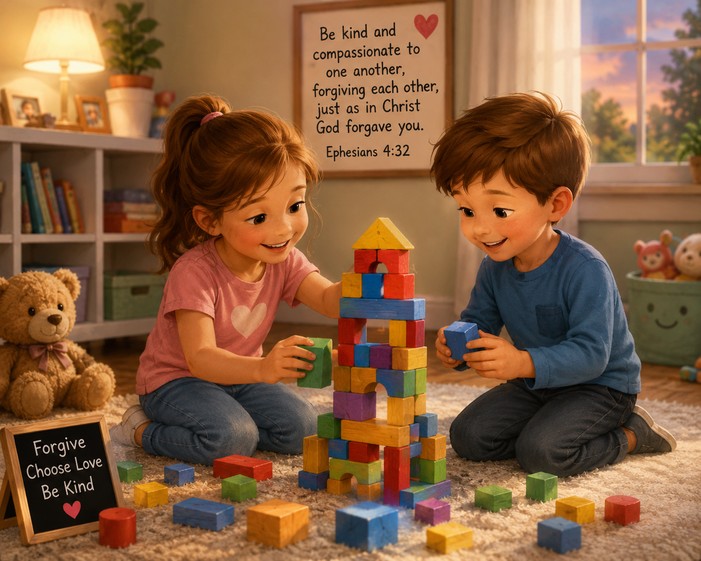
“Be kind and compassionate to one another, forgiving each other, just as in Christ God forgave you.”
Ephesians 4:32
This verse connects three important choices: kindness, compassion, and forgiveness. Kindness considers how our actions affect someone else. Compassion notices another person’s feelings. Forgiveness chooses to release the desire to hurt someone back.
The final part of the verse gives children the reason Christians forgive. We forgive because God has shown mercy to us through Jesus. We may still feel hurt, and trust may take time to rebuild, but we can ask God to soften our hearts and guide our next step.
What Children Can Learn
A strong heart does not have to hold onto anger. With Jesus’ help, I can choose kindness, tell the truth about my hurt, and begin to forgive.
Children can learn that forgiveness is often a process rather than a feeling that appears immediately. They can pray honestly, speak with a trusted adult, and take one loving step at a time.
They can also learn the importance of asking for forgiveness. A sincere apology names what happened, accepts responsibility, and tries to make things right. These habits help raise kind children who understand both grace and responsibility.
Conversation Starters
- What does forgiveness mean in your own words?
- Why can forgiving someone feel difficult?
- How has God shown forgiveness and kindness to us through Jesus?
- Is forgiveness the same as saying that a hurtful choice was okay? Why not?
- What can you do when you want to forgive but still feel upset?
- How can we apologize well when we have hurt someone?
- Is there someone we can ask God to help us treat with greater compassion?
Family Activity
Create a Kindness and Forgiveness Heart. Cut a simple heart from paper. On one side, write or draw ways your family can show kindness this week. On the other side, write a short prayer such as, “Jesus, help our family forgive as You forgive us.”
Place the heart somewhere your family will see it. When conflict happens, use it as a gentle reminder to pause, tell the truth kindly, listen to one another, apologize when needed, and ask God for help. Children should never be pressured to write private details or name someone who has hurt them.
Family Prayer
Dear Jesus, thank You for loving us and forgiving us. When our feelings are hurt, help us bring our pain to You. Give us kind words, compassionate hearts, and the courage to forgive. Help us apologize when we are wrong and make wise choices when trust needs time to grow again. Let our family reflect Your grace and love. In Jesus’ name, Amen.
Final Encouragement
Helping children forgive others rarely happens through one conversation. It grows through patient examples, honest prayer, gentle correction, and many small opportunities to practice grace.
You do not need a perfect response for every difficult moment. Keep pointing your child toward Jesus, who understands hurt, offers mercy, and gives us strength to love. For more faith-building support, you can browse the Parent Guides library or learn more about the heart behind Bedtime Bible Letters.
Perfect for Families and Children’s Ministry
These Parent Guides are designed to help:
- Family bedtime discussions
- Sunday School lessons
- Homeschool Bible study
- Children’s church
- Family devotions
- Small group discussions
These Parent Guides are meant to be shared. Print a copy for your home, church, homeschool, or classroom, and use it to help children discover God’s Word in meaningful and practical ways.